Stop Losing Heat Through Your Attic and Walls
Spray Foam Insulation in Great Falls for homes with persistent drafts and uneven room temperatures
Mogli Insulation installs spray foam insulation for homeowners and business owners in Great Falls who need to stop air leakage that drives up heating bills and creates cold spots during Montana winters. You notice the difference most clearly in rooms that never seem to warm up no matter how high you set the thermostat, or when you feel cold air moving along baseboards and outlet covers. This service targets those gaps and cracks where standard insulation fails to seal, and it works in attics, exterior walls, crawl spaces, pole barns, and metal buildings across the region.
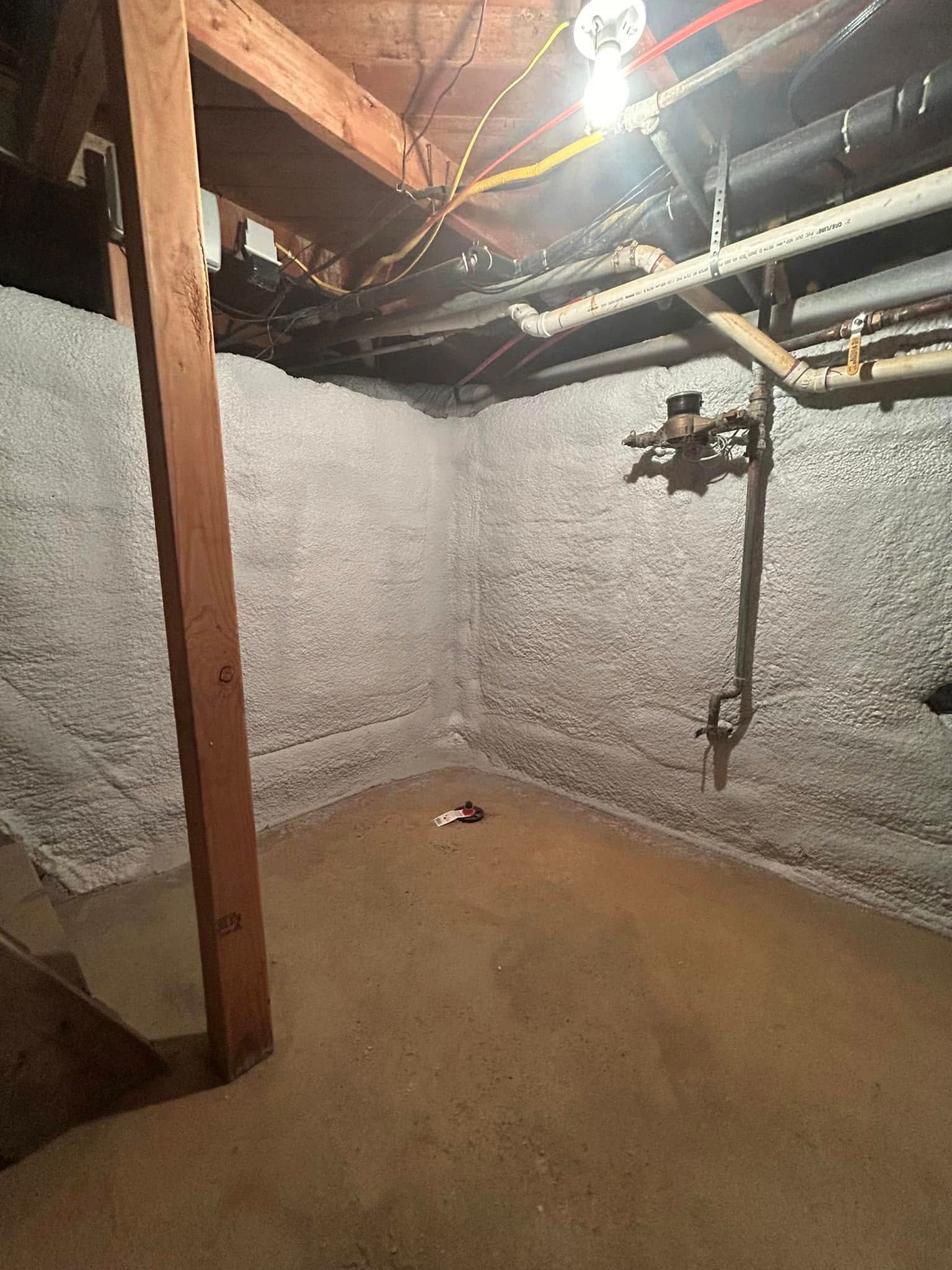
The foam expands on contact, filling voids and forming an airtight barrier that also resists moisture infiltration. During application, the two-part mixture is sprayed directly onto framing and sheathing, where it cures into a solid layer that adds structural rigidity. In Great Falls, where winter temperatures regularly drop below zero and summer heat can push into the nineties, spray foam delivers consistent thermal performance that reduces the strain on your furnace and air conditioning. This material works well in both new construction and retrofit upgrades where older insulation has settled or left gaps.
If you are planning an energy upgrade or building a new structure and want insulation that seals as well as insulates, reach out to discuss how spray foam fits your project in Great Falls.
What Happens During and After a Spray Foam Installation
Your installation begins with surface preparation to remove dust, debris, and loose material that could interfere with adhesion. The crew masks windows, outlets, and fixtures, then sprays the foam in controlled passes to build up the required thickness without overfilling cavities. The foam expands rapidly, so timing and technique matter to avoid waste and ensure even coverage across joists, studs, and irregular surfaces common in pole barns and metal building assemblies.
After the foam cures, you will notice that drafts around doors and windows disappear, rooms hold temperature more consistently, and your heating system runs less frequently to maintain comfort. Mogli Insulation trims excess foam flush with framing so that drywall or interior finishes install cleanly. The sealed envelope also reduces moisture movement, which helps prevent condensation issues in attics and crawl spaces where temperature differences are greatest during Montana winters.
The installation requires ventilation during application and a brief curing period before the space is fully reoccupied. Spray foam is not typically installed in occupied rooms without temporary relocation, and it is not recommended for areas where future access to plumbing or wiring is anticipated without planning for removable panels. The material is permanent once cured, so any modifications to wall cavities or rooflines require cutting through the foam layer.
Common Questions About Spray Foam Insulation Work
Homeowners and builders in Great Falls often ask about application methods, curing time, and how spray foam compares to other insulation types for new construction and retrofit projects.
What R-value does spray foam provide per inch of thickness?
Closed-cell spray foam typically delivers an R-value between six and seven per inch, while open-cell foam provides around three and a half per inch, so the choice depends on your space constraints and thermal goals.
How long does spray foam take to cure before you can return to the space?
Most formulations cure enough for reentry within a few hours, but full curing and off-gassing can take up to twenty-four hours depending on temperature and humidity conditions in Great Falls.
Why is spray foam often recommended for metal buildings and pole barns?
Metal buildings lack standard framing cavities, and spray foam adheres directly to metal panels and posts, sealing seams and preventing condensation that causes rust and interior dripping during temperature swings.
When should you choose closed-cell foam over open-cell foam?
Closed-cell foam works best in exterior applications, basements, and crawl spaces where moisture resistance and structural support are priorities, while open-cell foam suits interior walls and attics where airflow and sound dampening matter more.
What preparation is required before a spray foam crew arrives at your property in Great Falls?
You need to clear the work area of stored items, cover or remove anything sensitive to overspray, and ensure the space is accessible for equipment and hoses that run from the truck to the application site.
Mogli Insulation works with property owners across Great Falls and surrounding areas to assess which foam type and thickness will meet your building requirements and budget. If you are ready to schedule an evaluation or have specific questions about your attic, walls, or outbuilding, call to set up a site visit and get a detailed estimate based on your project scope.